
This article explains how to view history data in BriefBuilder: who made which change, when and what was changed?
History for entire model
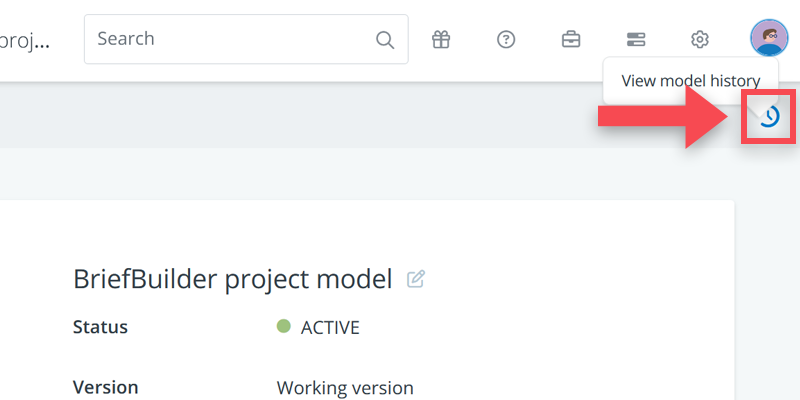
To view changes made to the requirements in a project model, you can click on the history icon on the project home:
- Go to the project home.
- Click on the history icon in the upper right corner of your screen.
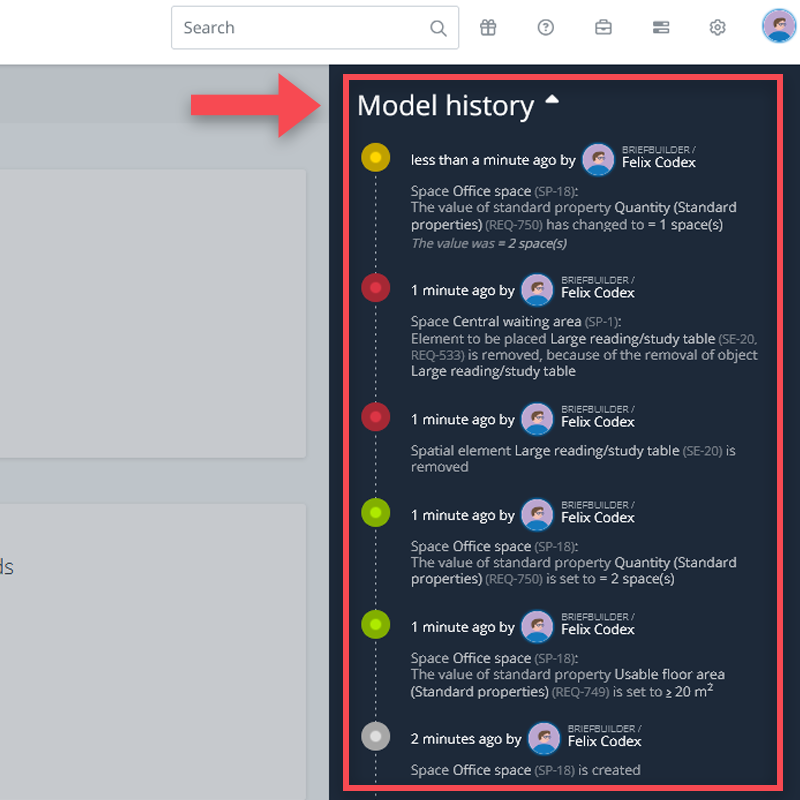
- When it opens, it will show all the recent activity concerning requirements.
History for an object
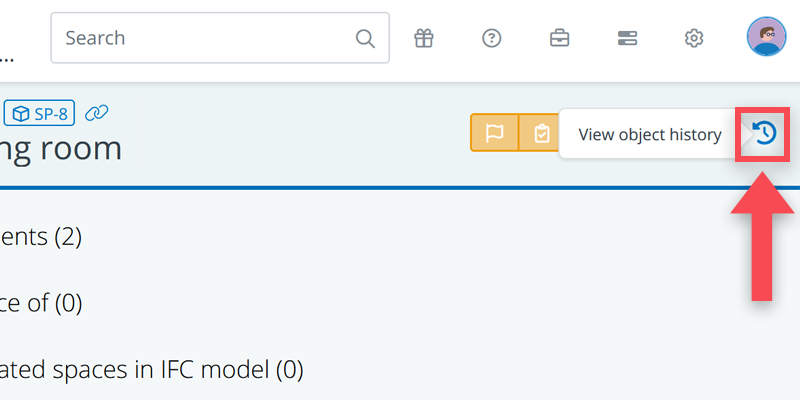
To view changes made to a specific object, you can click on the history icon on the object’s detail view.
- Go to the object’s detail view.
- Again, click on the history icon in the upper right corner of your screen.
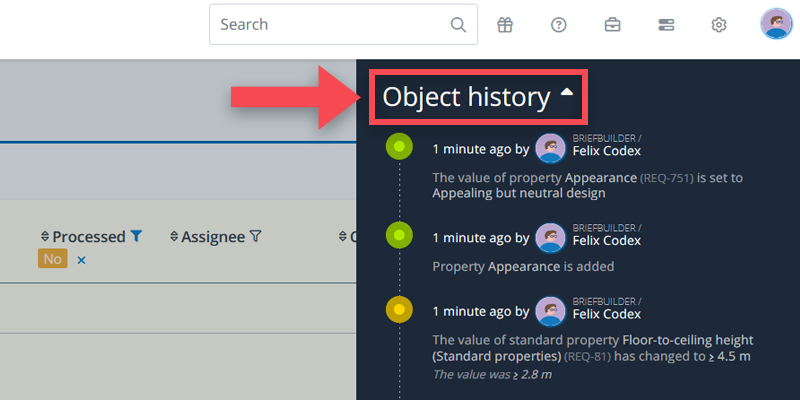
- After opening, it will show all the recent activity and changes of that specific object only.
Legend
Note that the type of change is indicated by a colour code:
- Grey = Newly added object.
- Green = New requirement (value).
- Yellow = Changed requirement or object.
- Red = Deleted requirement or object.
Viewing changes in analysis and verification data
There are two ways to view changes made to analysis properties and verification data. One is to view them in the tabular overviews of these categories. The other is to view the history on the detail page of an object.
Steps to view in a table:
- Go to either the analysis or verification table.
- Hover with your mouse over any of the cells (for example, in the result column).
- A text balloon will pop up with the history data from the most recent change.
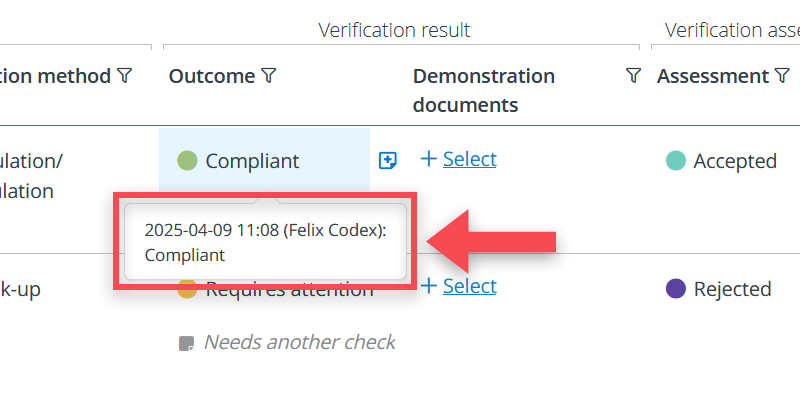
Steps to view in the detail view:
- Open the detail page of any object (for example, a space).
- In the upper right corner, toggle the orange view buttons to see analysis or verification properties.
- Click on the analysis or verification next to a requirement to see the history data in the pop-up window.
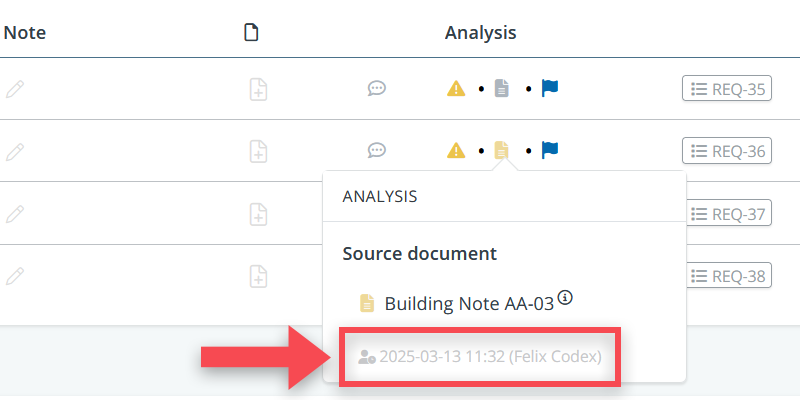
Permissions for viewing history
Because the history feature shows all the edits that have been made, access is limited to users who have a role with specific permissions that allow them to view it. Users without these permissions will not be able to see the history data.
Read more about roles and how to set up permissions for history data in this article.